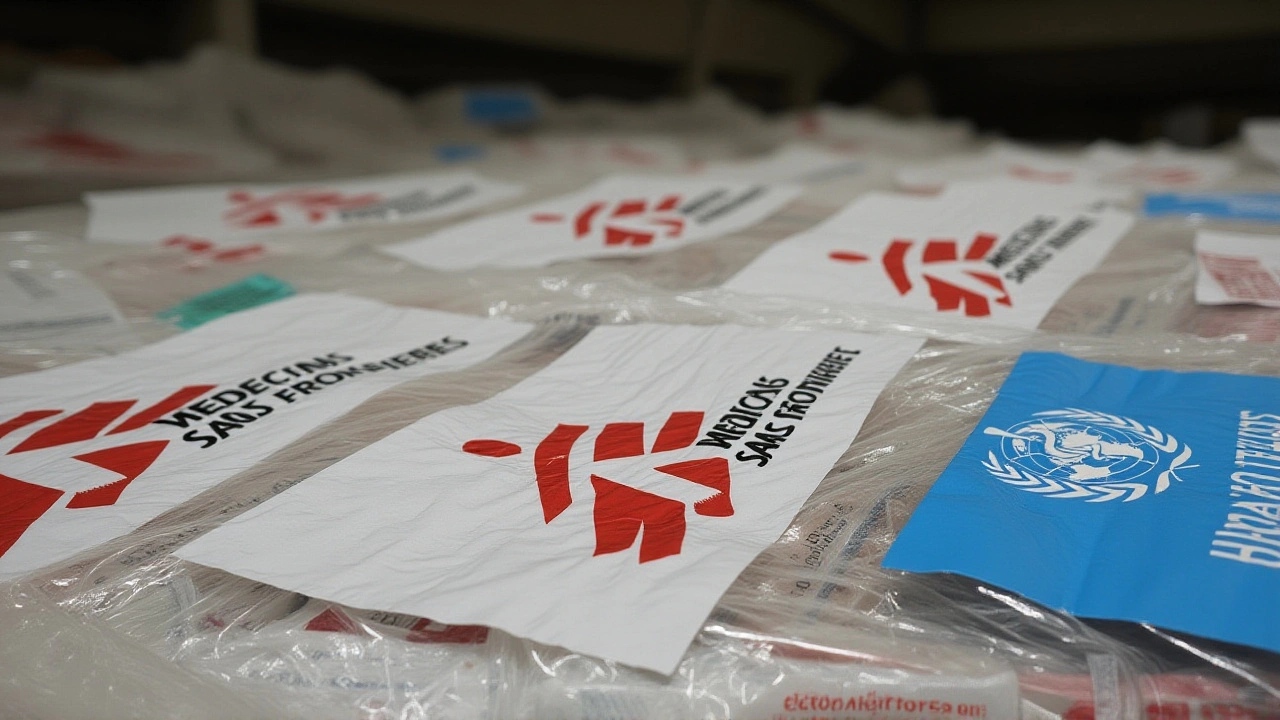
When Lise Klaveness, president of Norwegian Football Federation, announced on September 3, 2024 that every kroner from the upcoming Norway‑Israel World Cup qualifier would be funneled to Doctors Without Borders, the news hit the headlines faster than the first kickoff. The match, a 2026 FIFA World Cup qualifying fixtureUllevaal Stadion in Oslo, is set for October 11, 2024 – and the ticket pool is already sold out at exactly 23,000 seats. Here’s why this gamble matters: it turns a routine sporting event into a direct lifeline for a war‑torn civilian population, spotlighting the uneasy overlap of global football and geopolitics.

Daisy Pimentel
October 12, 2025 AT 18:58It's astonishing how a sport that thrives on competition can become a conduit for humanitarian aid. When Norway turns ticket revenue into medical relief, it forces us to confront the moral obligations of fandom. The gesture says that profit shouldn't eclipse empathy, especially when lives are at stake. Some will call it a PR stunt, but the reality is that any amount of aid can shift the balance for those in Gaza. In the end, it's a reminder that our passions can be redirected toward a greater good.
Ellen Ross
October 16, 2025 AT 06:18One must admit that the depth of this initiative is almost philosophical-if not for the obvious display of virtue signalling. The Norwegian federation, in an audacious move, decided to allocate every krone, not just a token amount, to Medecins Sans Fronti?res, and that is a statement about the power of sport as moral architecture. Some might scorn this as a clever marketing ploy, but I see it as a legitimate attempt to rewrite the narrative of conflict through collective generosity. It is definitive evidence that even within the arena of football, there lies a potential for ethical reformation. Critics will inevitably try to diminish its impact, yet the resources will reach those who need them most.
Fabian Rademacher
October 19, 2025 AT 17:38What they're really doing is using the match as a cover to funnel money into an agenda that benefits shadowy global elites.
Terrell Mack
October 23, 2025 AT 04:58Seeing this kind of initiative gives me hope that sports can be more than just a game. It's cool to think that fans buying tickets are indirectly supporting medical aid. The collaboration between the federation and Doctors Without Borders feels genuine. I’m rooting for a fair match on the field and for the success of the donation effort. Keep the good vibes rolling.
Dawn Waller
October 26, 2025 AT 15:18Oh, look at Norway trying to be the saviour‑of‑the‑world whilst a football ball rolls around the pitch!!! iT’S like, "yeah, we’ll throw a bit of cash at a problem we can’t solve"?? But hey, at least they’re *pretending* to care, n0t? The drama, the irony, the *glorious* mismatch of priorities!!!
Grace Melville
October 30, 2025 AT 02:38Great move by Norway, it’s a concrete step toward helping those in need. 😊
Ashlynn Barbery
November 2, 2025 AT 13:58Indeed, the decision to allocate ticket revenue to medical aid aligns with the principles of solidarity and responsible governance. It demonstrates how sports institutions can act as agents of social responsibility, fostering a culture of empathy without compromising competitive integrity. I appreciate the careful coordination with Doctors Without Borders, ensuring that contributions are directed where they are most needed. Let us hope this sets a precedent for future events across the globe.
Sarah Graham
November 6, 2025 AT 01:18I think it’s wonderful when organizations use their platform for positive impact. It shows that football can bring people together not just on the field but also in compassion. My hope is that more federations follow this example.
Jauregui Genoveva
November 9, 2025 AT 12:38Wow, another “humanitarian” stunt-how original. 🙄 If only every match could do this, maybe the world would stop shouting about “peace” while buying merch. 😒 Still, I guess a little aid is better than none, even if it’s a publicity trick. 🙏
Quinten Squires
November 12, 2025 AT 23:58Let me break down why this whole situation is a perfect illustration of the intersection between sports economics and geopolitical soft power. First, the sale of 23,000 tickets represents a sizable injection of capital into an arena that traditionally is insulated from humanitarian concerns. Second, the decision to channel those funds to a reputable organization like Doctors Without Borders bypasses the usual bureaucratic hurdles that plague aid distribution. Third, the public narrative shifts from a mere qualifier match to a global statement about solidarity and responsibility. Fourth, fans buying tickets are inadvertently becoming donors, blurring the line between consumerism and philanthropy. Fifth, the media coverage amplifies the impact, creating a feedback loop that encourages other federations to emulate the model. Sixth, the economic model here is replicable-sell a high‑profile event, allocate proceeds, and gain goodwill. Seventh, this move also serves as a soft diplomatic gesture, subtly influencing public opinion about the conflict without overt political statements. Eighth, the partnership with an NGO ensures that the funds are managed transparently, mitigating accusations of misappropriation. Ninth, the timing of the qualifier-just before the World Cup-maximizes visibility. Tenth, the involvement of the Norwegian Football Federation adds credibility, as Norway is often seen as a neutral, humanitarian‑focused nation. Eleventh, this initiative could inspire corporate sponsors to incorporate similar clauses in their agreements, further expanding the financial pipeline. Twelfth, the long‑term effect might be a cultural shift where fans expect clubs and federations to take stands on social issues. Thirteenth, the success of this model could pressure governing bodies like FIFA to institutionalize charitable allocations for major events. Fourteenth, the ripple effect could extend beyond football, influencing other sports. Fifteenth, the mere existence of this story in mainstream outlets demonstrates that public appetite for socially conscious sports is growing. Finally, whether the intended aid reaches its target effectively depends on on‑the‑ground logistics, but the framework itself represents a step forward in integrating compassion with competition.
Tyler Manning
November 16, 2025 AT 11:18While the rhetoric of philanthropy is commendable, it must be acknowledged that such gestures often serve to mask underlying nationalist agendas. By framing the initiative as a purely humanitarian effort, the federation sidesteps scrutiny of its own political affiliations. The utilization of sport as a vehicle for soft power is not new, and this instance is no exception. It is imperative that we assess the broader implications beyond the immediate aid, recognizing how these actions can reinforce nationalistic narratives under the guise of altruism. Such a perspective ensures a balanced evaluation of the true impact.
james patel
November 19, 2025 AT 22:38The allocation of ticket revenue to medical logistics aligns with established frameworks for corporate social responsibility within sports governance. By leveraging existing revenue streams, the federation optimizes resource distribution efficiency while maintaining compliance with regulatory standards. This approach exemplifies strategic stakeholder engagement, enhancing brand equity and facilitating cross‑sector collaboration.