
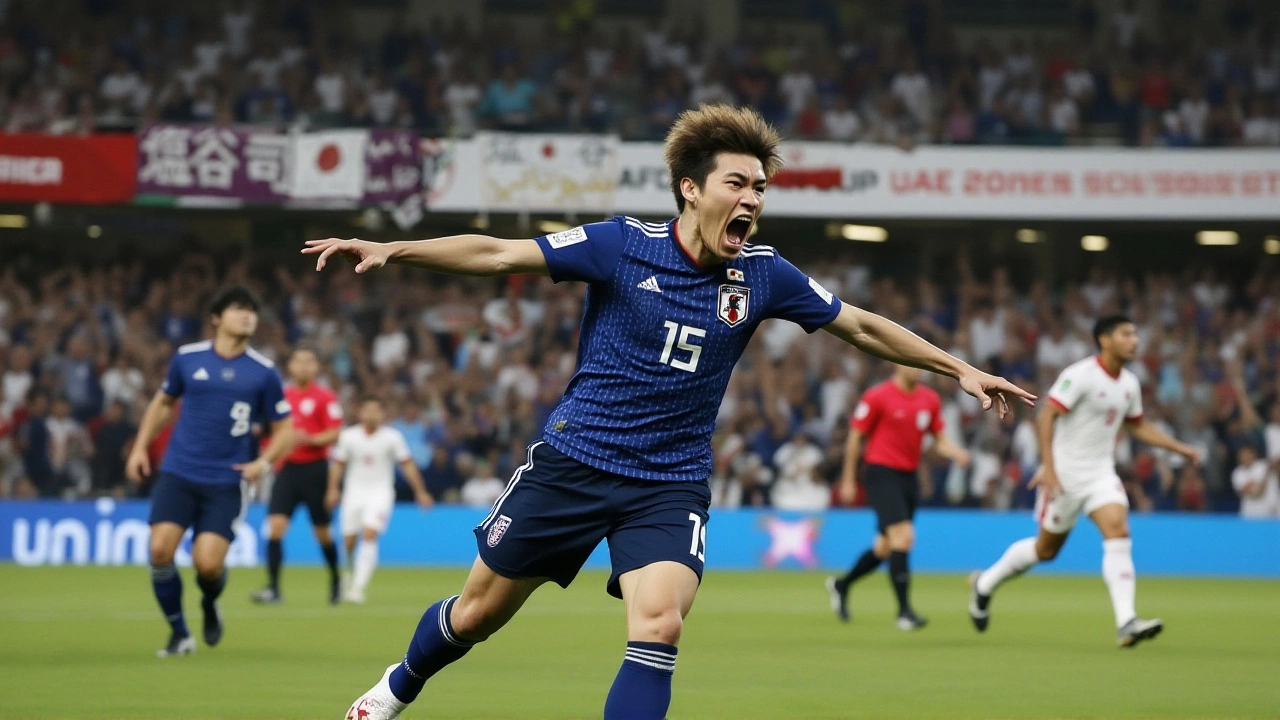
When Japan national football team met Paraguay national football team at Panasonic Stadium Suita on 10 October 2025, the game ended in a dramatic draw that left fans buzzing about 2026 World Cup hopes. The International Friendly Match 2025Suita, Osaka Prefecture kicked off at 10:20 UTC under clear skies, with both sides eager to test new formations before the qualification sprint.
Match Overview
The opening 20 minutes were a textbook example of Paraguay’s quick‑transition game. Miguel Almirón sliced through the Japanese back line and curled a left‑footed finish into the top corner at the 20‑minute mark. Japan answered just six minutes later when Koki Ogawa latched onto a through‑ball from Takumi Minamino and nudged it past the Paraguayan keeper.
Half‑time arrived with the score level at 1‑1, and the teams went into the dressing rooms with everything to play for. The second half saw Paraguay take the lead again when Diego Gómez headed in a cross amid a gentle wind that favored attackers. Japan’s late surge, fuelled by fresh legs, culminated in Ayase Ueda slamming home a winner in the fourth minute of added time, sealing the 2‑2 result.
Key Moments and Tactical Shifts
Paraguay’s first substitution came at 63 minutes, bringing on Gómez for Juan Iturbe in an attempt to sharpen their aerial threat. Japan replied a minute later, swapping in Kaoru Mitoma for veteran Takumi Minamino. The tempo spiked as both coaches—Japan’s Hajime Moriyasu and Paraguay’s Gustavo Morínigo—tested fresh legs in midfield.
The decisive moment arrived at 78 minutes when Japan introduced Ueda for Ogawa, shifting the striker’s role to a more central, poaching position. Minutes later, a swift Paraguayan change—bringing on Raúl Martínez for Ángel Sanabria—was meant to reinforce defensive solidity, but it opened a sliver that Ueda exploited.
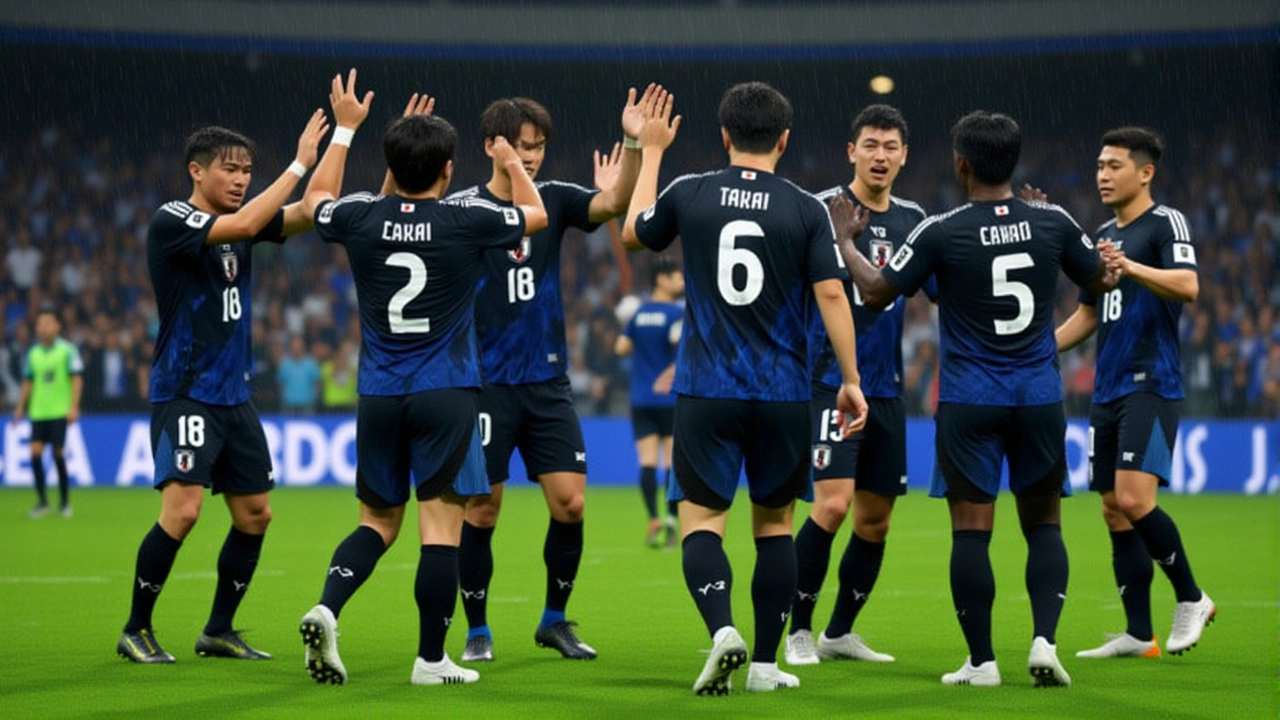
Statistical Breakdown
- Possession: Japan 58 % – Paraguay 42 %
- Total shots: Japan 14 (6 on target) – Paraguay 10 (4 on target)
- Pass accuracy: Japan 84 % – Paraguay 78 %
- Highest‑rated players (Sofascore): Junya Itō (7.8) and Miguel Almirón (7.6)
The numbers tell a clear story: Japan controlled the midfield but struggled to convert dominance into goals, while Paraguay’s efficiency in limited chances kept them in contention until the final whistle.
Reactions and Expert Takeaways
After the final whistle, Moriyasu praised his side’s resilience: “We showed we can respond under pressure. Ueda’s late goal proves the depth we have across the frontline.” Morínigo, meanwhile, highlighted the need for sharper finishing: “Almirón and Gómez did well, but we must improve how we create clear-cut chances against disciplined defenses.”
Analysts at ESPN noted that the match provided a useful benchmark for both squads ahead of the Asian and South American qualifying rounds. The quick succession of substitutions—12 in total—underscored each coach’s willingness to experiment with formations that could be crucial in the high‑stakes matches to come.

Future Implications
For Japan, the draw serves as both encouragement and warning. The next friendly against Australia on 15 November 2025 will likely test the defensive line that conceded two second‑half goals in Osaka. Paraguay, on the other hand, heads into a showdown with Brazil on 18 November 2025, where they’ll need to tighten up at the back while preserving the counter‑attack that produced Almirón’s early strike.
Both federations have indicated that data from this match—possession patterns, pressing triggers, and set‑piece outcomes—will be fed into their scouting departments as they fine‑tune squad selections for the qualifiers. In a region where margins are razor‑thin, a single goal at the end of a friendly can shift confidence levels in ways that echo through the qualifying campaign.
Frequently Asked Questions
How does this draw affect Japan’s World Cup qualifying strategy?
The result highlights Japan’s strength in possession but also exposes a need for sharper finishing. Coach Moriyasu is expected to prioritize more direct attacking drills before the November clash with Australia, aiming to turn dominance into goals when the stakes are higher.
Which players stood out for Paraguay and why?
Miguel Almirón’s early breakthrough set the tone, while Diego Gómez’s aerial goal demonstrated Paraguay’s effectiveness on set pieces. Both received high Sofascore ratings, indicating their impact across the pitch.
What tactical changes did the coaches implement in the second half?
Japan introduced Ayase Ueda to press higher and add a poacher’s instinct in the box, while Paraguay swapped in a larger striker, Diego Gómez, to capitalize on aerial opportunities. Both sides also rotated midfielders to maintain intensity.
When is the next match for each team, and who are their opponents?
Japan’s next friendly is scheduled for 15 November 2025 against Australia in Sydney. Paraguay will face Brazil on 18 November 2025 in Asunción, a key test before the South American qualifying round begins.
How did the venue’s conditions influence the game?
Panasonic Stadium Suita’s clear skies and mild wind favored wing play and aerial duels. The wind particularly aided Diego Gómez’s heading attempt that gave Paraguay the second‑half lead.
Sreenivas P Kamath
October 11, 2025 AT 00:22Japan finally showed they can scrape a point when the clock hit extra time, but honestly the defense looked like they were auditioning for a comedy sketch. Moriyasu’s substitution of Ueda was a masterstroke – if you enjoy last‑minute drama, that’s the ticket. Still, the fact they needed a four‑minute added goal to equalise is a glaring reminder of their finishing woes. Guess they’ll have to tighten up before Australia shows up.
Chandan kumar
October 16, 2025 AT 08:22What a snooze‑fest, could've been over in ten minutes.
Swapnil Kapoor
October 21, 2025 AT 16:22The tactical adjustments in Osaka provide a textbook case of how modern managers must balance possession with penetration. Japan’s 58 % share of the ball clearly indicates their midfield dominance, yet the translation of that dominance into quality chances was sub‑optimal. By the 63rd minute, Paraguay’s decision to introduce Gómez signalled a shift toward aerial threat, a move that paid dividends with the second‑half lead. Moriyasu’s counter‑move, deploying Mitoma for Minamino, was intended to inject fresh tempo on the flanks, but the real game‑changer arrived later with the introduction of Ueda. Replacing Ogawa with a more central poacher altered Japan’s attacking shape, allowing them to exploit the narrow gap left by Martinez’s defensive substitution. This underscores the importance of timing: the earlier a manager spots a tactical imbalance, the more likely they can capitalize before the opponent re‑adjusts. The match also highlighted the value of squad depth; both benches contributed directly to the scoreline, proving that the ‘second string’ is no longer a luxury but a necessity. Statistically, Japan’s shot accuracy of 84 % suggests they are technically proficient, yet the low conversion rate points to a potential psychological barrier in the final third. Paraguay’s efficiency, with only four shots on target but two goals, illustrates a higher expected‑goals (xG) per shot ratio, something Japan must address in training. The wind’s subtle influence on Gómez’s header could be a reminder to account for micro‑environmental factors in set‑piece rehearsals. Moreover, the quick succession of twelve substitutions reflects a growing trend where coaches use friendlies as live labs rather than mere warm‑ups. From a scouting perspective, the data on pressing triggers collected here will feed into both federations’ analytics departments, shaping future match‑preparation. Player‑specific insights, such as Ueda’s late‑game stamina and ability to find space in crowded boxes, will likely increase his minutes in upcoming qualifiers. Conversely, Almirón’s early breakthrough reaffirms his status as a decisive playmaker for Paraguay, emphasizing the need for Japan’s defensive midfielders to maintain tighter zones. The psychological impact of conceding a late goal cannot be understated; it may catalyse a heightened sense of urgency in the Japanese camp. Finally, this draw serves as a cautionary tale: dominance without decisive finishing is as good as a hollow victory, especially when the stakes are World Cup qualification.
kuldeep singh
October 26, 2025 AT 23:22Honestly, if you think Paraguay’s defence was anything less than a sieve, you’re living in a fantasy world. They handed Japan a free lane like it was an all‑you‑can‑eat buffet. And that Ueda goal? Pure luck riding on a sloppy rebound. Morínigo should have swapped out his centre‑backs before the second half; that would’ve spared us this drama. Still, the game had its moments, even if most were thanks to Japan’s mistakes.
Shweta Tiwari
November 1, 2025 AT 07:22While the match’s statistical profile clearly underscores Japan’s superior possession metrics, it is equally evident that converting such dominance into decisive outcomes remains a challenge. The tactical substitutions executed by both benches displayed a commendable level of strategic insight, however, the timing of these changes could have been further optimised. It is noteworthy that Almirón’s early strike set the tone, yet the subsequent equaliser by Ueda was a direct result of astute positional adjustments. In summation, the encounter serves as a valuable case study for refining finishing efficiency and defensive resilience. Overall, both squads exhibited promising attributes that will be instrumental in the upcoming qualifiers.
Harman Vartej
November 6, 2025 AT 15:22Japan controls the midfield but needs sharper finishes. Paraguay knows how to make the most of their chances.
Sridhar Ilango
November 11, 2025 AT 23:22Yo, did anyone actually see how Paraguay’s defense turned into a Swiss cheese platter after that wind gust? It was like watching a Hollywood action scene where the hero walks in slow‑mo just to get knocked down. And Japan? Yeah, they strutted around with 58 % possession like they owned the stadium, but when it came to actual goal‑mouth business they were as nervous as a cat on a hot tin roof. The substitution saga was a roller‑coaster – one minute you’re thinking “finally, fresh legs”, the next you’re scratching your head wondering why the coach swapped a striker for another striker! Ueda’s late heroics were as surprising as finding a $20 bill in an old coat pocket, but hey, it’s still a draw, not a win. So, let’s just hope both teams tighten up before the real pressure hits – otherwise we’ll be stuck watching more nail‑biting drama that could’ve been avoided with a bit more precision.
Preeti Panwar
November 17, 2025 AT 07:22It was such a tense finish, but both teams showed heart until the final whistle 😊. Japan’s resilience after going down was impressive, and Paraguay’s early strike gave them a real boost. Hopefully the lessons learned here translate into cleaner performances in the qualifiers.
MANOJ SINGH
November 22, 2025 AT 15:22The match exposed Japan’s over‑reliance on possession without clinical edge, while Paraguay proved that a compact defense can be undone by quick transitions. Both sides need to work on set‑piece defending – that wind‑assisted header was a cheap goal. Still, the tactical swaps were spot‑on, giving a nice glimpse into each coach’s plan.
harshit malhotra
November 27, 2025 AT 23:22Ever watched a team think they’re invincible just because they dominate the ball? Japan strutted around Osaka like they owned the continent, yet they needed a stoppage‑time miracle to avoid defeat. It’s a bitter pill for any fan who values real attacking intent over lazy ball‑pumping. Paraguay, on the other hand, showed the ferocity of a true underdog, striking when the opponent’s guard dropped. The wind may have aided Gómez, but credit where it’s due – his aerial timing was ferocious. Ueda’s goal felt like a last‑second rescue mission, but it doesn’t erase the fact that Japan’s defense looked like a paper wall. If the Samurai Blue don’t tighten up, the upcoming clash with Australia could turn into a disaster. Let’s hope the coaching staff learns from this close call before the real battles begin.
Ankit Intodia
December 3, 2025 AT 07:22Football’s a dance of odds and chances, and tonight both sides took turns leading. Japan’s midfield choreography was smooth, yet the final move needed a bit more spark. Paraguay’s quick strike was the perfect counter‑beat.
Deepanshu Aggarwal
December 8, 2025 AT 15:22From a performance analysis angle, Japan’s pass accuracy of 84 % is impressive and indicates good technical foundation. However, the conversion rate suggests a need to work on shooting under pressure – perhaps incorporating high‑intensity finishing drills could help. Paraguay’s efficiency (4/10 shots on target) shows they make the most of limited opportunities, a trait worth emulating. Both teams should also review the timing of their substitutions; the data suggests that earlier tactical changes might yield better outcomes. Keep pushing forward, and good luck in the qualifiers! ⚽️
akshay sharma
December 13, 2025 AT 23:22Let’s cut to the chase: Japan’s possession stats are nothing but a vanity metric without a corresponding xG conversion. Paraguay’s surgical use of counter‑attacks turned a seemingly lopsided duel into a balanced affair. The coaches’ willingness to roll twelve subs demonstrates a modern, data‑driven approach, but it also risks disrupting game rhythm. If Japan wants to avoid another late scramble, they must recalibrate their final third efficiency. Likewise, Paraguay should tighten their defensive line to prevent those late equalisers. In short, dominance ≠ victory; execution does.
Harshada Warrier
December 19, 2025 AT 07:22Did anyone notice the oddly timed whistle on the extra minutes? Feels like someone pulled strings to force that Ueda goal. Maybe the organizers wanted a dramatic finish for TV ratings.
Jyoti Bhuyan
December 24, 2025 AT 15:22What a roller‑coaster! Keep that fire burning, both squads – the world stage awaits! 💪
Amar Rams
December 29, 2025 AT 23:22From an analytical paradigm, the possession differential underscores a systemic control over the central zones, yet the stochastic nature of goal probability remained unchanged. The differential in shot quality, measured via expected goals (xG), elucidates the inefficacy of high‑volume low‑precision attempts. Substitution latency further modulated the tactical entropy, injecting variability into the transitional phases. Consequently, the equilibrium state gravitated toward a 2‑2 Nash equilibrium, reflecting optimal mixed‑strategy deployment under bounded rationality constraints.
Rahul Sarker
January 4, 2026 AT 07:22The Japanese side clearly lacked the killer instinct, allowing Paraguay to snatch an early lead with a cheap header. Their defense was as porous as a sieve, and the late equaliser was nothing more than a fluke. If they don’t tighten up, the upcoming qualifiers will be a nightmare for any true fan of the nation. Meanwhile, Paraguay’s performance was a masterclass in exploiting weaknesses, proving they’re not to be underestimated. This draw should serve as a wake‑up call for Japan; anything less than a win is unacceptable.
Danwanti Khanna
January 9, 2026 AT 15:22Indeed-what a match!; the defensive frailties were glaring; and the late goal, while lucky, exposed deeper tactical issues. Japan must address these before the next fixture.
Manu Atelier
January 14, 2026 AT 23:22While the assessment highlights several pertinent points, it would be prudent to consider the contextual variables influencing the match outcome. Factors such as environmental conditions and player fatigue may have contributed to the observed inefficiencies. A nuanced approach to future preparation is advisable.